
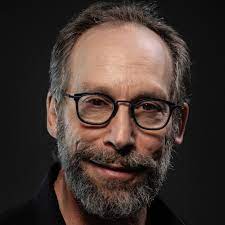
Lawrence Krauss

Prof. Lawrence M. Krauss

https://lawrencemkrauss.com/

Prof. Lawrence Maxwell Krauss, THEORETICAL PHYSICIST – Award-Winning NYT Bestselling Author

Prof. Lawrence Maxwell Krauss (born May 27, 1954) is an American theoretical physicist and cosmologist who previously taught at Arizona State University, Yale University, and Case Western Reserve University. He founded ASU's Origins Project in 2008 to investigate fundamental questions about the universe and served as the project's director.

Krauss is an advocate for public understanding of science, public policy based on sound empirical data, scientific skepticism, and science education. An anti-theist, Krauss seeks to reduce the influence of what he regards as superstition and religious dogma in popular culture.[2]
Krauss is the author of several bestselling books, including The Physics of Star Trek (1995) and A Universe from Nothing (2012), and chaired the Bulletin of the Atomic Scientists Board of Sponsors.

Krauss is one of the few prominent scientists today to have actively crossed the chasm between science and popular culture. For example, besides his radio and television work, Krauss has performed with the Cleveland Orchestra, narrating Gustav Holst’s The Planets at the Blossom Music Center in the most highly attended concert at that venue, and was nominated for a Grammy award for his liner notes for a Telarc CD of music from Star Trek. In 2005, he also served as a jury member at the Sundance Film Festival. For all of these reasons and more, Scientific American called him one of the few true ‘scientific public intellectuals”.

In 2013, starred in a full-length feature film documentary called The Unbelievers, which follows Krauss and colleague Richard Dawkins around the world as they discuss science and reason. He also co-stars in Werner Herzog’s new films Salt and Fire and Lo and Behold as well as appearing in The Farthest, a documentary celebrating the men and women who built the Voyager spaceship. He appears regularly in science documentaries on television and appeared monthly on PBS discussing science issues. He is also producing and writing various television and film projects, in some of which he will appear.
Research

Prof. Krauss is the author of over 500 publications, as well as numerous popular articles on physics and astronomy. He is the recipient of numerous awards for his research and writing, including the American Association for the Advancement of Science’s 1999-2000 Award for the Public Understanding of Science and Technology, the 2001 Julius Edgar Lilienfeld Prize of the American Physical Society, the 2001 Andrew Gemant Award, of the American Institute of Physics, the 2003 Oersted Medal, the highest award of the American Association of Physics Teachers. He is the first physicist to have been awarded these latter awards from all three US physical societies.

Among more recent awards are included the Helen Sawyer Hogg Prize of the Royal Astronomical Society of Canada and the Astronomical Society of Canada (2009), The US National Science Board 2012 Public Service Award, Roma Award Urbs Universalis (2013), Academia Film Olomouc award for Outstanding Communication of Science (2014), Gravity Research Foundation First Prize Winner (2014), American Humanist Association’s Humanist of the Year (2015), Richard Dawkins Award (2016), and the Freedom From Religion’s “Emperor Has No Clothes Award” (2016).
Krauss has been elected a Fellow of the American Physical Society and of the American Association for the Advancement of Science, and in June 2003 was awarded an honorary D.Sc degree from Carleton University in recognition of his scientific contributions, and his efforts at public understanding of science. He has been involved for some time in issues of science and society and has helped spearhead national efforts to educate the public about science, ensure sound public policy, and defend science against attacks at a variety of levels
Prof. Krauss is also an acclaimed teacher and lecturer with vast experience in reaching out to popular audiences and has lectured at hundreds of institutions around the world. He has been a regular contributor to various newspapers and magazines including The New York Times and The New Yorker. Prof. Krauss is the author of ten acclaimed popular books, including, The Fifth Essence: The Search for Dark Matter in the Universe (Basic Books, 1989), which was named Astronomy Book of the Year by the Astronomical Society of the Pacific, Fear of Physics (Basic Books, 1993), his AIP award winning book, Atom: An Odyssey from the Big Bang to Life on Earth…and Beyond, and the New York Times Bestsellers, The Physics of Star Trek, A Universe from Nothing: Why There is Something Rather Than Nothing and The Greatest Story Ever Told…So Far. His most recent book, The Physics of Climate Change, appeared in February of 2021. His newest book, The Known Unknowns: Unsolved Mysteries of the Cosmos, will be released in May 2023.

The texts were published in the Krauss original website - lawrencemkrauss.com

Image credit: lawrencemkrauss.com

Lawrence Maxwell Krauss

Explore the life and work of Lawrence M. Krauss, world-renowned theoretical physicist, commentator, bestselling author, President of The Origins Project Foundation and host of the Origins Podcast. Here, you can discover more about Lawrence M. Krauss’s past and present work, writing, appearances, events, and how to connect with him via email and social media.

Among his numerous important scientific contributions was the proposal, in 1995, that most of the energy of the Universe resided in empty space. Lawrence M. Krauss previously served as Director of Arizona State University’s Origins Project, and Foundation Professor for a decade from 2008-2018, and also as Chair of the Board of Sponsors of the Bulletin of the Atomic Scientists from 2006-2018. During his career Prof. Lawrence M. Krauss has held endowed professorships and distinguished research appointments at institutions including Harvard University, Yale University, University of Chicago, Boston University, University of Zurich, University of California at Santa Barbara, Lawrence Berkeley Laboratory, the European Center for Nuclear Research (CERN), Case Western Reserve University, Australian National University, Arizona State University, and New College of Humanities.

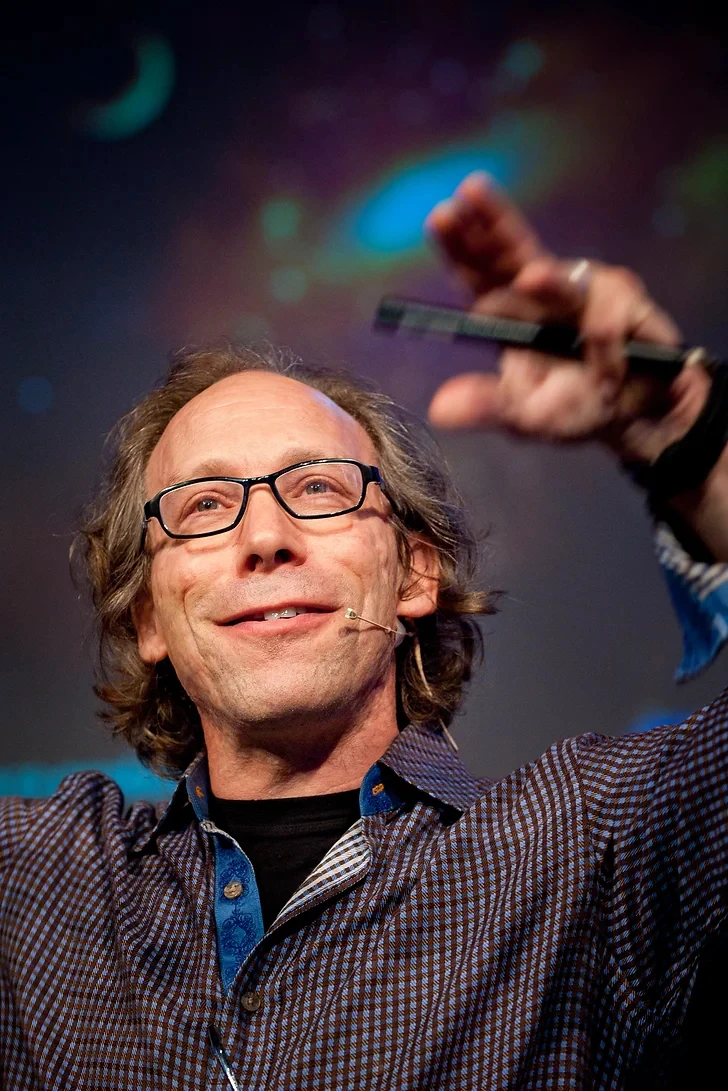
Lecture

Lawrence M. Krauss Performance on SWS Vienna Scientific Conference

1 / 1