Janet MacFadyen

Janet MacFadyen, American poet and scientific researcher

Janet MacFadyen – an American poet and scientific researcher – is one of the many who feels the need to change our attitude towards, and concepts of, natural phenomena. She gracefully expresses that feeling. MacFadyen transforms scientific perception into vivid poetic imagery that invokes deep insights into Nature and our connection with it. Her poems transmogrify hills and rocky formations into cities, stones and crystals into ancient teachers, rivers and brooks into the circulatory system of our living and breathing Mother Earth.

Janet MacFadyen is the author of five works of poetry, with a sixth book, State of Grass, forthcoming from Salmon Poetry in 2023.
Her most recent book, Adrift in the House of Rocks, is an environmental collaboration with the photographer Stephen Schmidt (New Feral Press 2019) focused on the landscape, geology, and political strife of southern Utah. The previous book, Waiting to Be Born (Dos Madres Press), drew both from a dune shack residency in the U.S. Cape Cod National Seashore coinciding with a powerful October nor'easter, and from travels to national parks across the United States.
Her work has appeared widely, from Scientific American, CALYX, Crannog, and Poetry Magazine, to online environmental journals such as Terrain: a Journal of the Natural and Built Environments and The Tiny Seed. Her poetry has been nominated for the Forward Prize and two Pushcarts; and anthologized in Honoring Nature: An Anthology of Authors and Artists Festival Writers.

Read Author's Post: /janetmacfadyen
Poems

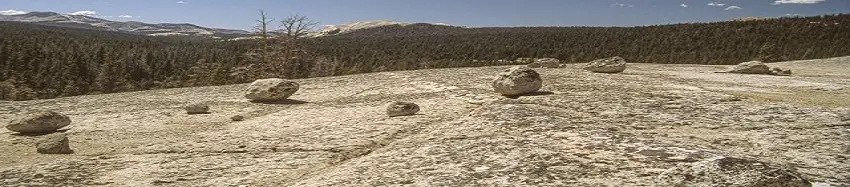
The Boulders of Lyell Canyon

Originally published in Scientific American, May 2020
and on their online site under the title "Teachers of Ice"

I name them Upright, Lengthwise, Split
Down the Middle: these granites strewn
like milky stars. You could orient by them, find
your way through creek, meadow, and wood.
This one is here, and that one is there, its neighbor
next to both, old friends grinding down shards
of philosophy. It could take a million years
to see the argument to conclusion, points
split finer and finer, rubbed to a sheen
into pebbles, then to sand in an hourglass.
They record the course of floods, huddle
together beneath parent slopes where they
were wrenched and scraped by glaciers, shaped
and molded by teachers of ice, which explains
their patience and hardness, having been milled
so interminably slowly to an exacting rule.
Now they languish, sun seeping into feldspars
and micas, into the quartzes until they quiver
with pure excitation—in heat and cold, wind
and stillness, through minutes and millennia,
and still radiate impassiveness.

The Earth, at Work

First published in SWS Social Sciences and Art & Humanities Blog (SSA Blog), February 2021
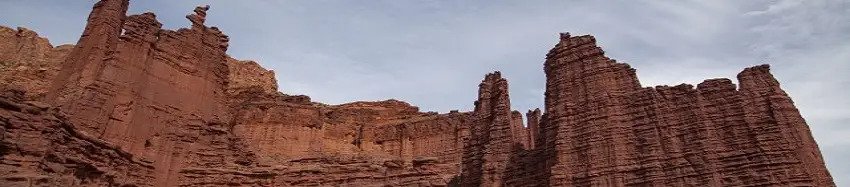
Fisher Towers, Moab; photo © by Stephen Schmidt

At the feet of towering cliffs, facades
soar like city blocks, civilization
self-created, unthought —

The ancient seas worked hard and long
to lay the sediments down — each breaking wave

left riffles in the sand,
inch by inch, eon by eon. Through sheer

repetition the cliffs are wrought—
warp and weft, across and down—

interlacing fingers of water and wind
weave a fabric
from the dust of rock.

In Defense of Stones

Оriginally published in Sanctuary, The Journal of the Massachusetts Audubon Society
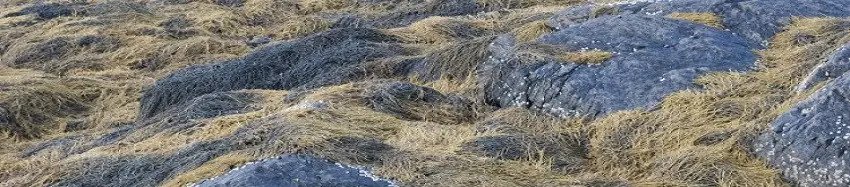
photo © by Stephen Schmidt

For instance, take that stone
by the guard rail over there. One day
it will break down into sand, won't it?
And be mixed with leaves and leached

by water, oh slowly, but for sure?
Then won't a root suck it up with its long
flexible straw, powered by the secret
green lips of the plant? Won't it suck

with all the fierce joy it can muster?
And if the plant were a bean, perhaps I eat
each pod, feeling the rightness of it,
and one day this whole stone will be inside me,

and I speak from prior knowledge
of generations of stones lodged in my gall
bladder, the knowledge that I too will be ground
in the dark gizzard of the world.

I chew this notion over and over, how it happens
that I could end up food for a rock
or the rock itself: rigid and grey
and alone. But maybe stones

are just another way of living—
you could say a different style—
and if only we knew how to listen
to such enormous or tiny sounds,

we could hear their low, age-long conversations
at cliff bottoms or along riverbeds;
or feel how they embrace life so fiercely
they batter themselves to bits.

So I wonder, who is the stubborn one here—
the boulder in the field refusing to budge
for anyone, or me in the road,
arguing with myself, refusing to live?

Cascade

First published in SWS Social Sciences and Art & Humanities Blog (SSA Blog), February 2021
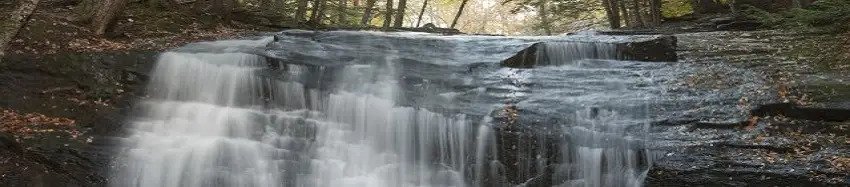
photo © by Stephen Schmidt

Like tangled hair over stone, roots
    hold trees against a stream. The current loosens
its gorgeous fall, braids and unbraids
    against the rock while roots draw water
to the crown, a fountain and a glory.
    The falls pull water downward
from their spring, the spring
    rises and overflows; leaves
push outwards; the weeping willow
    greens. Cascades swell with rain and spill
their shimmering ringlets down, fall
    and fall all summer long until trees
let down their hair and leaves
    are loosed, lips call sap
back to the earth and all
    stands dark and silent.
Frost grows, the current
    swirls and slows under lacey ice
but does not stop. A tree's heart
    does not freeze in its quiet
sleep. So close and so
    far under. I lay
my hand on root
    and rock. I dip
my hand in water
    and the sap
wells up.

About the poet

She was a recipient of a 7-month fellowship at the Fine Arts Work Center in Provincetown, MA; and has held residencies at Cill Rialaig in County Kerry, Ireland, two dune shacks in Provincetown, MA, and Wellspring House in Ashfield, MA. She is currently the managing editor of the collaborative poetry publisher, Slate Roof Press.
Ms. MacFadyen's non-fiction writing has appeared in Natural New England; and her research has contributed to pieces in the Atlantic Monthly, Forbes FYI, AARP Magazine, and Lost Discoveries, a history of the non-Western roots of science published by Simon & Schuster.

"Since I have anthropomorphized nature in my poetry, let me take on the subject. I could say: that when nature is cast in human form, it makes the scientific processes undergirding it easier for most people to understand, more comforting for them to absorb, and so easier to love. And if we humans are moved to love, then we are often moved to protect and save — which would be a good thing in this time of environmental degradation.
But that implies a certain analytical process when first drafting poetry, and the analytical brain inevitably shackles any deep insights trying to arise against our previously held expectations. The truth is, I have always found it easier to talk to other creatures than to talk to people. Partly, I do this in the way older people and children talk to themselves, not really expecting an answer, and partly because I don't see much difference, really, between myself and the ants, or the white pines behind my house, or the onions in my cupboard. Nature is a good listener, whereas other people often are not. I try to return the favor and be a good observer of nature myself. It is possible, I find, to open up my pores to try to experience the fundamental natures of other inhabitants of our world."

Below you can enjoy and reflect upon Janet MacFadyen's statement and meditative poetry!